-
James Talarico is Incapable of Being Truthful to Texas Voters
-
No Longer In Dispute—Democrats Are The Party of Hate & Violence

-
Only One Texas Senate Candidate Has Fought To Stop TX Sharia Enclaves and It Ain’t Democrats’ Muslim-Fanboy James Talarico

-
From The Mouths of Idiots: Democrat-Socialist James Talarico Says If Capitalism Ends, Prisons Will Become Obsolete
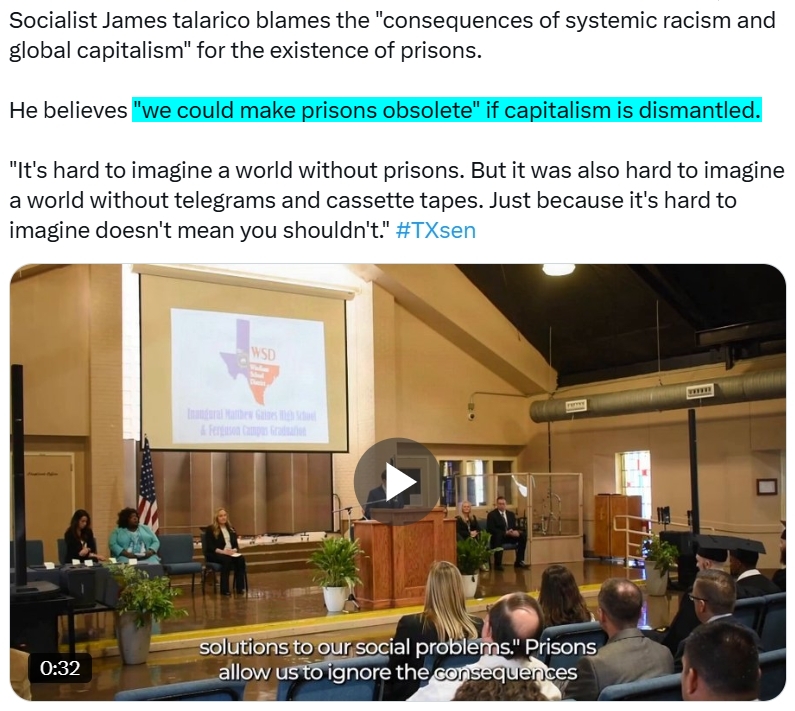
‘X’ source: Lone Star Liberty-https://tinyurl.com/yx7jrnbc
-
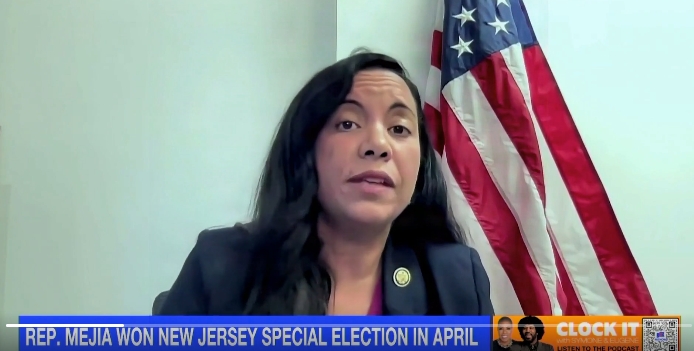
Democrat Rep. Analilia Mejia thinks abolishing police, prisons, and borders is “an indicator of the vibrancy and wellness of our Democratic party.”
-
Peggy Flanagan’s Senate Platform: A Recipe for Economic Decline, Open Borders, and Weakened National Security

From the typical Midwestern voter’s commonsense point of view, Minnesota Democrat Lieutenant Governor Peggy Flanagan’s 2026 U.S. Senate campaign represents an incredible leftward lurch of the modern Democratic Party.
Running as a self-described Democrat-Progressive and White Earth Nation citizen, Flanagan has built her platform around expansive government control of healthcare, aggressive redistribution, hostility toward immigration enforcement, and skepticism of traditional American alliances. If enacted, her “Progressive” type of the Democratic Socialists of America (DSA) agenda would expand the administrative state, punish success, undermine border security, and further polarize the country along identity lines—precisely the opposite of Midwestern values of limited government, personal responsibility, and strong national defense that most Americans want.
Flanagan is of mixed Irish and Ojibwe descent; although her father’s exact Native American blood quantum is unclear. Surprisingly, she does not honor her Native American heritage by keeping her father’s surname. Instead, she uses her mother’s Irish surname, Flanagan, rather than her father’s (Manypenny) or her husband’s (Weber).
In regards to her actual government experience, during her tenure as lieutenant governor under Governor Tim Walz, an immense amount of fraud in Minnesota state programs was facilitated by lack of Democrat administrative oversight and accountability. So far, potentially $9 billion of fraud has been identified by federal investigators, government auditors, and private whistleblowers.
At the center of Flanagan’s platform is her embrace of Medicare-for-All, a single-payer system with DMV-style of delivery, which would effectively nationalize healthcare and prove to be fertile ground for even larger fraud potential. She argues that healthcare is a “human right” and that private insurance and high deductibles have failed working families. However, Medicare-for-All would replace patient choice and market competition with a government bureaucratic approval process, rationing to lower costs, lengthy wait times, and ballooning deficits of an already financially broken Medicare system. The United States already spends more per capita on healthcare than most peer nations; adding a massive new entitlement while eliminating private options would drive taxes higher, reduce innovation in pharmaceuticals and medical technology, and crowd out private-sector jobs.
Flanagan’s related calls to let the government negotiate all drug prices and ban prior authorization further illustrate a distrust of markets and a preference for bureaucratic control over individual and physician decision-making” or “patient and physician decision-making. Just like the government-controlled COVID-19 health-care fiasco, giving bureaucrats ultimate decision power over patients and doctors is a recipe for a health disaster.
On the economy, Flanagan prioritizes raising the federal minimum wage substantially (often citing $17 or higher, indexed to inflation), passing the PRO Act to empower unions, enacting national paid family leave, and universal childcare.
She frames these policies as necessary so “one job should be enough.” Contrary to her socialist opinions, these policies ignore basic economic realities. Artificially high minimum wages price low-skilled and young workers out of the job market, particularly in rural Minnesota and small businesses that operate on thin margins. The PRO Act would tilt the playing field heavily toward organized labor at the expense of employers and non-union workers, while new mandates for paid leave and childcare would impose costs that ultimately reduce take-home pay or employment opportunities.
Flanagan’s simultaneous push for higher taxes on the wealthy—including expanding Social Security taxes on high earners and rolling back recent tax cuts— a classic socialist belief that government can simply confiscate via higher taxes, allowing the government to spend even more and redistribute the taxes to Democrats’ favored constituencies. From all the economic policy history, this approach has repeatedly failed: it discourages investment, drives capital and talent elsewhere, reduces private-sector employment, and grows the very bureaucracy that always fails to deliver efficient services.
Immigration policy reveals one of the starkest divides. Flanagan has repeatedly called for “ripping ICE apart,” criticizing Immigration and Customs Enforcement as out-of-control and terrorizing communities. She pairs this with support for a pathway to citizenship and an emphasis on due process and family unity.
Her immigration policies are a simple reenactment of the wildly failed policies of Joe Biden and urban illegal alien sanctuary protections. Those polices caused a literal human invasion of illegal migrants by the millions, which caused wallet-busting consumer inflation, lower wages, higher rents, exorbitant starter home values, higher levels of fraud and violent crime, and pushed local and state resources to a threshold of collapse. At the federal level, the gigantic influx of illegals produced an undesirable downgrading of national cohesion, decreased tolerance, and produced a significant amount of polarization, not unity.
Her other domestic agenda items include her support for assault-weapon and high-capacity magazine bans, expansive abortion protections, and her emphasis on tribal and identity-based divisive politics further distance her from mainstream Midwestern voters who support Second Amendment rights, the sanctity of life, and color-blind equal treatment under the law. In short, Flanagan’s woke-culture platform is coherent with socialism’s progressive ideology: expand the welfare state, constrain markets and law enforcement, elevate identity and equity over individual responsibility. In other words, transform America into a nation that more closely reflects Cuba than our exceptional nation.
Regarding Flanagan’s foreign policy, it is primarily one of restraining American power abroad and naturally resorts to the left’s hatred of Israel, and embraces a brand of antisemitism that conveniently excuses or completely ignores the crucible of Mideast terrorism, Iran-backed Hamas and Hezbollah. Her policies are essentially a dangerous retreat from a long-standing role of counterterrorism efforts conducted in foreign lands instead of waiting for another homeland 9/11-style attack perpetrated by those who believe America is the ‘Great Satan’.
To summarize, Peggy Flanagan’s platform would accelerate fiscal insolvency, erode national sovereignty, convert our energy independence into renewed, potentially dangerous dependence, transfer jobs and factories to less costly nations, penalize successful people out of envy, and deepen cultural division. It is not a platform that prioritizes economic growth, or private job creation through free enterprise, or maximizes the continued success of American innovation, or continues the growth of reliable energy status, or produces secure borders, or stops the invasion of illegal immigrants, or establishes a verifiable election integrity system, or maintains a superior robust national defense superior to that of any other nation. These are all attributes that commonsense American voters want.
Below is a comprehensive list of Flanagan’s key platform positions:
- Medicare for All (single-payer universal healthcare)
- Allow Medicare and Medicaid to negotiate prices for all prescription drugs
- End prior authorization requirements
- Raise the federal minimum wage to $17 or higher and index it to inflation
- Pass the PRO Act to strengthen unions and workers’ organizing rights
- Enact national paid family and medical leave
- Universal childcare
- Expand affordable housing and restrict Wall Street purchases of residential properties
- Increase taxes on high earners (including applying Social Security taxes to income above $250,000) and roll back certain tax cuts for the wealthy
- “Rip ICE apart” / major overhaul of Immigration and Customs Enforcement while supporting a pathway to citizenship
- Protect and strengthen Social Security; oppose privatization
- Ban assault weapons and high-capacity magazines
- Ban corporate PAC donations; require full donor disclosure; ban stock trading by members of Congress and the president
- Reform the Supreme Court and protect free and fair elections
- Protect and expand abortion access (e.g., Women’s Health Protection Act) and require coverage for IVF
- Oppose additional offensive weapons sales to Israel; has described Israel’s actions in Gaza as genocide
- Oppose U.S. involvement in ongoing military efforts related to Iran
- Support clean energy development (wind, solar) and related union jobs
- Prioritize tribal issues and seek a seat on the Senate Committee on Indian Affairs
-
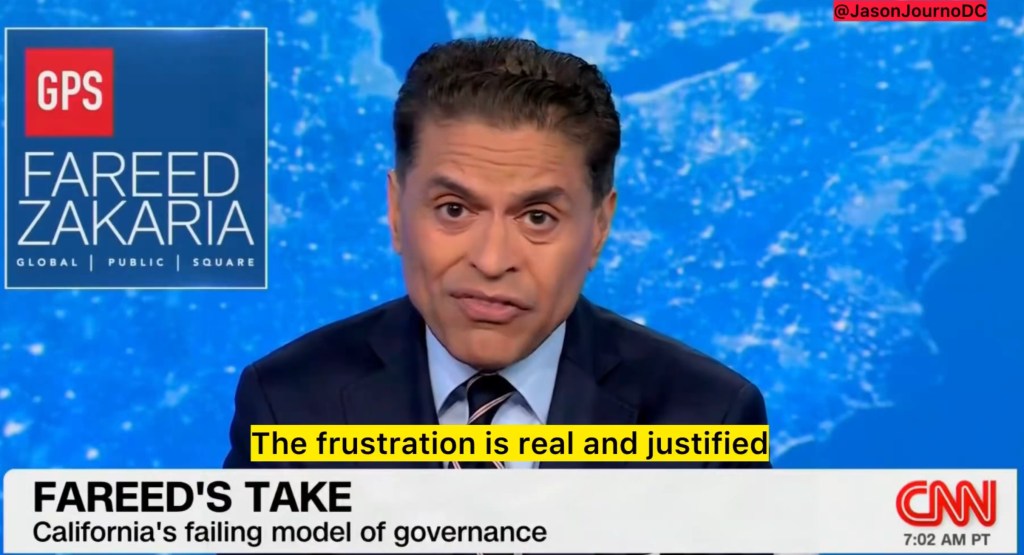
CNN Reveals the True Idiocracy of Democrats’ One-Party Rule in California
-
Hasan Kwame Jeffries, Brother of Top Democrat Hakeem Jeffries, Advocates Violence Against Whites
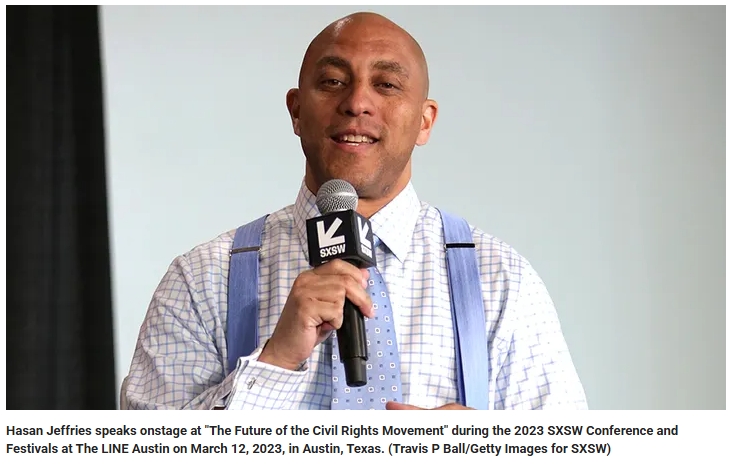
Hasan Kwame Jeffries, associate professor of history at Ohio State University and younger brother of House Minority Leader Hakeem Jeffries, recently ignited controversy with statements on X that critics interpret as endorsing violence against whites in the name of combating white supremacy. As a specialist in African American history, author of Bloody Lowndes: Civil Rights and Black Power in Alabama’s Black Belt, and host of the Southern Poverty Law Center’s “Teaching Hard History” podcast, Jeffries has long focused on resistance to racial oppression. Yet his May 2026 X post crossed into explicit advocacy for militant action, drawing widespread condemnation.
On May 9, 2026, Jeffries quoted a Jacobin magazine post celebrating the birthday of radical abolitionist John Brown. He wrote: “John Brown understood that the only way to free America from the scourge of white supremacy was to get rid of white supremacists by any means necessary. He was right then. He is right now.” The phrase “by any means necessary” directly echoes calls for uncompromising action, but in context it references Brown’s violent tactics.
Brown is infamous for the 1856 Pottawatomie massacre, where he and followers hacked five pro-slavery white settlers to death in Kansas, and his 1859 Harpers Ferry raid intended to incite a slave uprising. Jeffries’ endorsement frames such lethal force as morally justified both historically and today. When a user asked if these “white supremacists” were present, Jeffries replied they were “in the White House,” tying the rhetoric to the current political leadership.
The post quickly spread on X, amplified by accounts like Libs of TikTok, which highlighted it as a call to murder. Conservative commentators viewed it as thinly veiled incitement. Jonathan Turley, in a Fox News opinion piece, labeled it a “chilling call to arms,” noting Jeffries’ alignment with left-wing rhetoric urging citizens to fight the system “by any means necessary.” Campus Reform and other outlets reported the post as promoting John Brown’s philosophy of violence against white supremacy, especially given Brown’s explicit belief that the land’s crimes could only be purged “with blood.” X users reacted strongly, with many accusing Jeffries of normalizing political assassination and questioning Ohio State University’s response.
Jeffries later clarified to Campus Reform that he was not calling for violence against the president or his administration, describing Brown instead as “an American hero who gave his life for freedom and equality.” He maintained the post celebrated historical resistance rather than contemporary vigilantism. Nevertheless, critics argue the language—praising the elimination of “white supremacists” through any means, paired with the White House reference—advocates targeted violence against perceived racial enemies, effectively broadening to whites aligned with certain politics. This rhetoric fits Jeffries’ scholarly emphasis on Black Power and armed self-defense in the Civil Rights era, yet it escalates academic discussion into real-world calls for force.
The episode underscores deepening polarization. As brother to one of the Democratic Party’s top figures, Hasan Jeffries’ words carry symbolic weight, fueling accusations that elite academic and political circles tolerate or encourage rage-driven extremism. While free speech protects provocative historical analysis, equating modern “white supremacists” with 1850s slaveholders and endorsing Brown’s bloody methods raises serious questions about incitement in an already volatile climate. Jeffries’ advocacy, rooted in X posts and defended as anti-racist heroism, has instead spotlighted how invocations of revolutionary violence against “whites” (framed as supremacists) risk crossing from scholarship into dangerous political theater. In an age of heightened threats, such statements demand scrutiny beyond partisan lines.
GrokAI article based on multiple sources of information.
-
Apple Forced to Close Store Plagued by Retail Crime & Lootings In Democrat-Controlled Baltimore County

In April 2026, Apple announced it would permanently close its Towson Town Center store in Maryland on June 11. The company cited “declining conditions” at the mall and the departure of several major retailers, including Tommy Bahama, Banana Republic, and Madewell. The move affects roughly 90 employees and reflects broader challenges facing suburban malls nationwide.
The surrounding Towson Town Center faces documented problems. Retail theft, organized “link-up” youth lootings, stabbings, assaults, and slow police response times (often exceeding 20 minutes for shoplifting) have driven shoppers away and accelerated vacancies. These issues mirror broader retail struggles in the Baltimore region under long-term Democratic governance.
Apple’s decision highlights a tension: legitimate business pressures from e-commerce shifts, crime, and mall decay versus labor advocates’ fears of retaliation. Whether rooted in economics, safety, or union costs, the closure underscores the difficulty of sustaining physical retail in areas where public safety and property rights feel insecure. In the end, customers lose convenient access, workers face uncertainty, and communities confront the visible costs of urban decline. (h/t X.com @WallStreetApes)

-
From Communist Stagnation to Post-1989 Surge: How Democracy and Free Markets Transformed Life Expectancy in Eastern Europe
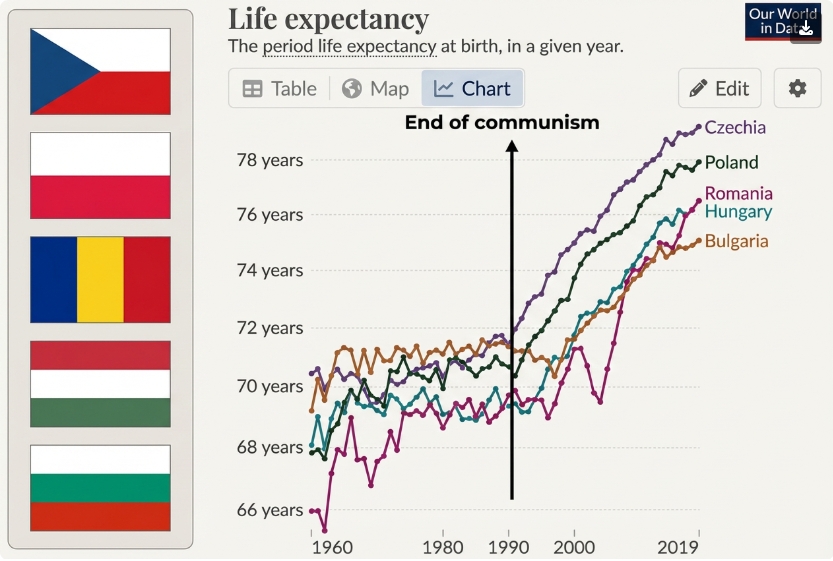
The Democratic Party takeover by extreme leftists does not bode well for the health of the nation’s citizens. History offers a stark warning in the post-communist transformation of Central and Eastern Europe. The chart (h/t X.com @EndWokeness) from Our World in Data illustrates life expectancy trends in Czechia, Poland, Hungary, Romania, and Bulgaria: decades of stagnation from the 1960s through the late 1980s under Soviet-style communism, followed by a sharp, sustained rise after the 1989–1991 collapse of the Iron Curtain. The switch to democratic governance and free-market economies was the decisive cause.
Under communist rule, central planning strangled progress. Governments dictated production quotas, suppressed private property, and allocated resources through political favoritism rather than consumer demand. Healthcare systems, though nominally universal, suffered chronic shortages of modern drugs, equipment, and trained personnel. Innovation stalled because there were no profit incentives for pharmaceutical companies or medical researchers. Diets remained poor—high in carbohydrates, low in fresh produce—while alcoholism and smoking rates soared as coping mechanisms in a gray, oppressive, censorship-driven society.
As a result, life expectancy in these nations flatlined even as Western democracies, with liberal freedoms and free-market economies advancing by five to seven years during the same period.
The 1989 revolutions within these 5 nations swiftly dismantled the command economies that were in place for decades overnight. Instead, they chose democratic constitutions enshrined with individual rights, free speech, and electoral accountability. Market reforms—privatization, price liberalization, and foreign direct investment—unleashed entrepreneurship. GDP per capita in these Central European countries roughly doubled within fifteen years; even slower-reforming Romania and Bulgaria eventually joined the European Union and adopted its regulatory and funding standards.
New wealth funded hospital modernization, imported medicines, and preventive care programs. Supermarkets filled with diverse foods improved nutrition. Competition among insurers and providers raised the quality of care. Personal freedoms also mattered: citizens could pursue healthier lifestyles without state-mandated conformity or surveillance.
By 2019, the five nations had added between four and eight years of life expectancy, erasing the communist-era gap with Western Europe. The chart’s inflection point at “End of communism” is no coincidence. It proves that removing central control, protecting property rights, and letting markets allocate resources delivers measurable gains in human welfare.
The lesson is universal: policies that concentrate power in the state at the expense of individual liberty and economic freedom predictably harm public health. Nations that forget this history of inefficient and corrupt command economies will dramatically increase the risk of significant degraded health outcomes for its populace.

-
Subscribe
Subscribed
Already have a WordPress.com account? Log in now.
 NewsOpinions
Leave a comment